

Nobody Cares, Mom
What we get wrong about people we've never met

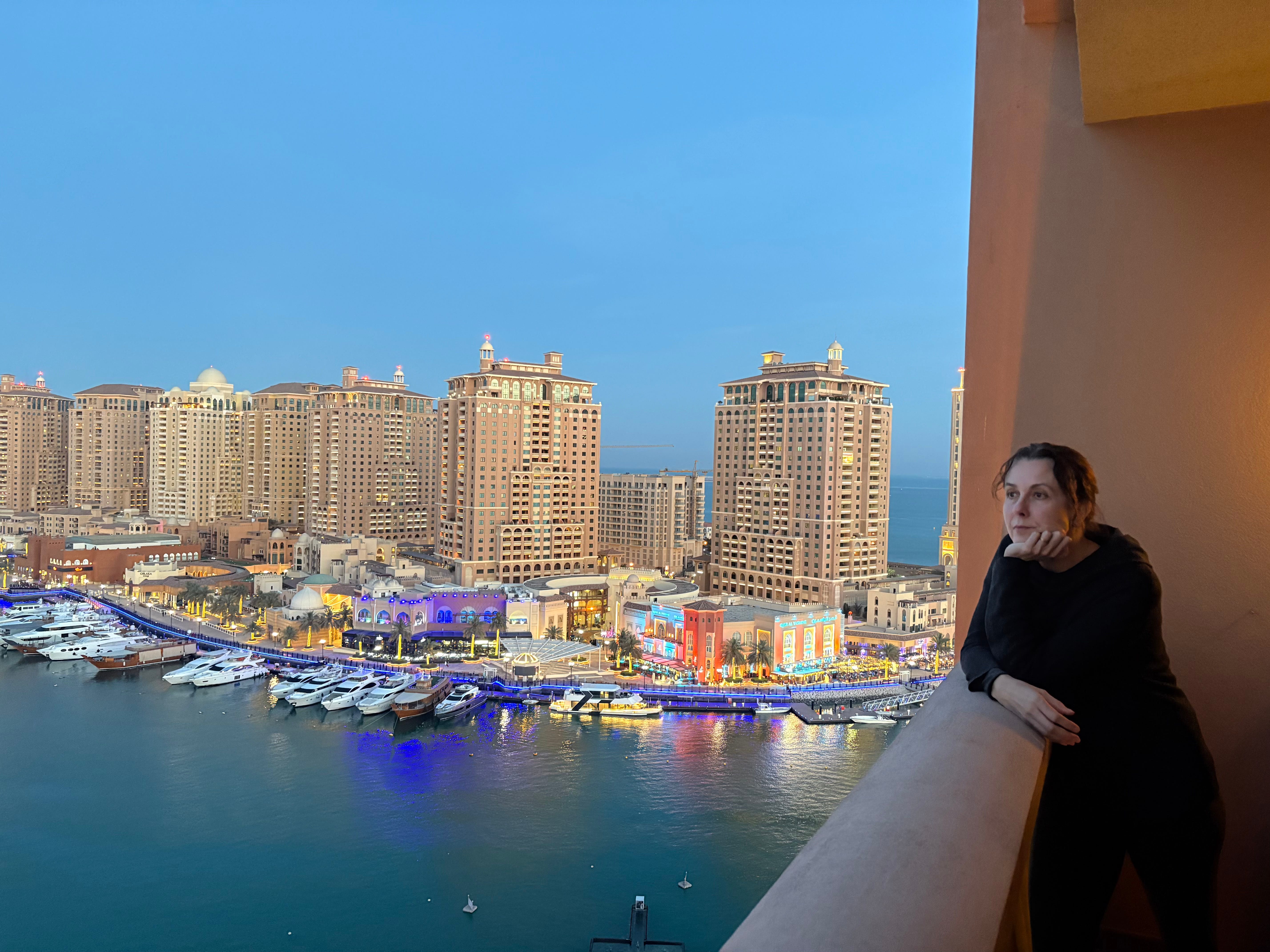
A few weeks ago, I was at a dinner party here in Doha when an American man I’ve come to like and respect made a passing remark about racist rural Americans. It was said the way people say things they assume everyone in the room already agrees with. I pushed back, gently, and I could see it confused him. Here I was, an obvious urbanite—what did I know?
Part of what brought my husband and me to the Middle East was a decision we made deliberately, almost stubbornly: we didn’t want to be people who only knew a place from the news and from other people’s conclusions. We wanted to see it ourselves, to be wrong about it in person. And we have been, repeatedly.
Which made that dinner party moment land harder than it might have otherwise. Because I'd spent twenty years living exactly that experience—arriving in central Virginia, at the edge of Appalachia, with a northerner's full set of assumptions and getting corrected by reality at every turn. I used to sit in the car line at my daughters' high school and watch a group of teenage boys—Black and white, obviously close, possibly even related—pile out of a pickup truck with a "Back the Blue" bumper sticker slapped proudly on the bumper. Inside the school, I once passed an interracial lesbian couple in full hunting camo walking hand in hand down the hallway. When I brought it up to my daughter, she shrugged and said, “Nobody cares, Mom.” Later, as I described this to my best friend, who lives in Washington, DC, it was like I was reporting a UFO sighting.
I wrote the essay below ten years ago. I'm reprinting it here, without changes, because good-hearted people can still say hard-hearted things—and do, regularly, in comment sections and op-ed pages where entire communities are reduced to caricatures of themselves. The cold civil war of perception asks no one to look closer.
Northern Lights, Southern Exposure: A Yankee’s Thoughts on Living in the South
May 11, 2016
I’ve been on a Sally Mann kick lately.
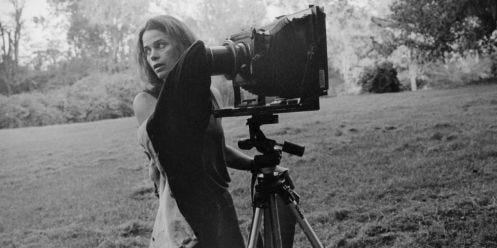
In the span of a few days, I binge-watched a recent CBS Sunday Morning segment, then a documentary about her life and photography. And if that wasn’t enough, I read her memoir, Hold Still, and reacquainted myself with her stunning body of work (at least what we have of it on our bookshelves) – from the controversial photos of her young children in Immediate Family to What Remains, her visual meditations on death.
And yet, despite how compelling I find her process and meticulous attention to detail, what’s stuck with me most is her philosophy of capturing the local, the immediate, rather than the highly conceptual, the wide-flung and international.
She talks at great length about being a southerner and loving the south – warts and all. In the way you love your family, even if some of them make you want to put a nail gun to your temple. Or theirs.
After having now spent a good deal of my adult life in the South, interpreting Sally Mann’s work and reading her life story has made me think about my own evolution in thought about my adopted home.
I grew up in the suburbs of Chicago, surrounded by neighbors with last names like O’Malley, Dulik, Zito and Dumbrowski. And I’m a Yankee who moved south with many, if not all of the same prejudices that my northern peers excel at.
See if this sounds familiar: the South is racist, backward, quaint, overly-mannered, full of fake smiles. It’s uneducated, unenlightened, and uninterested in ever evolving out of its troubled past.
I won’t discount them. Stereotypes don’t appear out of nowhere in a puff of pink genie smoke. Like gossip, they hold some truth.
Except that the South is also beautiful in a weeping, classical sense. Lush. It’s air is like hot breath, and it’s people are neighborly, stubborn, courtly, and languorous.
When I dropped off an antique clock at a repairman’s in April and asked when I should plan on picking it up, the clerk said – I kid you not, “Why don’t you try back about Thanksgivin’ ma’am.” The place was as quiet as church. The man as leisurely as a sip on a Mint Julep.
As a compulsive storyteller and story-listener, living in the South has provided fascination and fodder for me. Like the Irish, Southerners are lyrical in their thought and speech, chronicling the local through verse, drama, a pick on a guitar.
Think Mark Twain, Edgar Allan Poe, Frederick Douglass, Kate Chopin, William Faulkner, Tennessee Williams. And this is only a sampling from the immediate post Civil War period – a time when the South was utterly devastated and had no business contributing to the canon.
Post war stars of the literati include Eudora Welty, Flannery O’Connor, Harper Lee, William Styron, Truman Capote, Tom Wolfe, Anne Rice, John Grisham, Pat Conroy and Tom Robbins, just to name a few.
(Ok, I know I went heavy on the writers here, but what do you expect?)
It is because of the South that we have Jazz, Country and Rock-n-Roll music. Around the world, hearts ache, flutter and rejoice to the distinctly southern sounds of Johnny Mercer, Louis Armstrong, Ella Fitzgerald, Elvis Presley, Johnny Cash, Dolly Parton, Lyle Lovett, Jimmy Buffett, REM, The Black Crowes and yes, Lynyrd Skynyrd.
Because there is a depth in Dixie, one that plays muse to those of us inclined to interpret and examine. Maybe sing a love song. It lies beneath the wrap-around porches and behind the polite banter. In the tiny, time-warp towns that dot the valleys.
It is evident in the writings of Thomas Jefferson, notably “The Declaration of Independence.” In perhaps one of history’s great ironies, this document, written by a southern gentleman and slave owner, includes what has been called the greatest sentence ever written:
“We hold these truths to be self-evident, that all men are created equal, that they are endowed by their Creator with certain unalienable Rights, that among these are Life, Liberty and the pursuit of Happiness.”
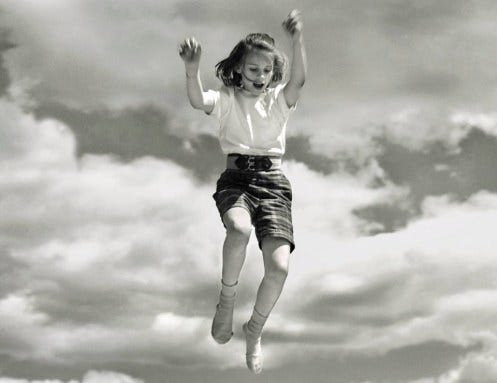
Still, at least for Yankees, the Hollywood-invented “Dukes of Hazzard” TV show seems a more typical example of southern culture.
Now, I’m not putting the blame squarely in the lap of un-watchable early eighties television here. It would appear the South’s reputation as a cultural backwater has been around for a while. It really took off in the 1920s, when Yankee writer H.L. Mencken penned a satirical piece highlighting the South’s inability to produce anything of cultural value. He became wildly popular after the publication of his essay, and his perceptions have stuck, taking on a life of their own and feeding the imaginations of coastal city rats.
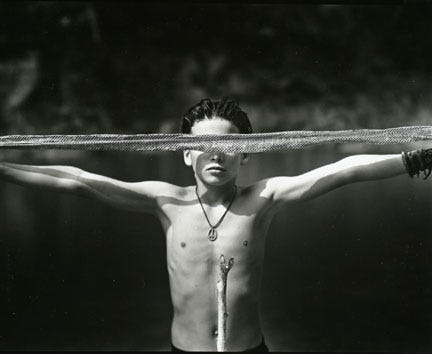
Years ago, when I acted in a British play (“Grace” by Doug Lucie), I portrayed a southern woman. A theater critic (NYC born and bred) spotlighted my excellent southern accent while disparaging another actress whose cadence “seemed fake” to him. Only that I’d gotten my accent from TV and my fellow actress was a real live southerner from Alabama.
I’m not saying this to pick on the critic – not much, anyway. It’s just that we northerners think we know southerners the way people think they know Britney Spears. We’re vaguely aware that regional inflections exist, but are utterly incapable of distinguishing between a Texan’s drawl and a Virginian’s lilt. We snicker about the South’s preoccupation with the Civil War. The statues of Stonewall Jackson and Robert E. Lee, the re-enactors.
“War, war, war,” if I can quote Scarlett O’Hara. Get over it!, we say.
But can you really blame southerners for their obsession? The Civil War was the pivotal event in our country’s history – the one that scarred us, shaped us, grew us up and made us who we are today. It happened on southern soil – the fighting and the bleeding, the burning, the gouging and the tears. Then the aftermath. The shame which lives on.
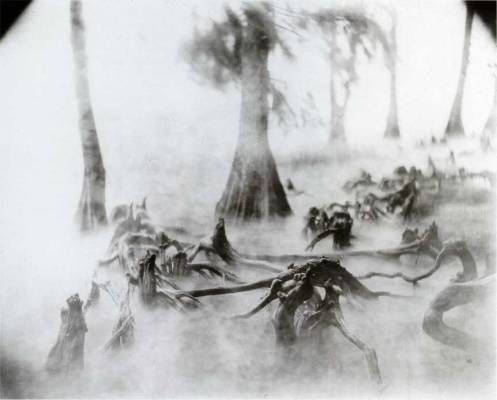
As Sally Mann points out, southerners are the only non-immigrant Americans who know what it’s like to lose. To return home in utter defeat…to crawl back to their families quite literally on their hands and knees. To have been on the wrong side of history and morality.
When you look at other cultures who have had to navigate devastating losses – the Slavs, the Germans, the Jews, the African-Americans – they share with the American South a fixation on who we are that’s difficult for your average Yankee to understand.
Here is my interpretation.
Yes, the South was the place of lynchings and the Ku Klux Klan. But it is also a place of self-reflection, of having to own up to devastating mistakes. Of trying painfully, desperately to change, without losing a sense of identity and dissolving into self-loathing and bitterness. Or violence.
Despite the specter of the past, or maybe because of it, there is a fellowship here that I never encountered in any place I’ve lived in the North. A sense of family and level of comfort between the classes and races that I admit took some getting used to.
Not because I didn’t like it, but because I simply didn’t expect it.
In many parts of the South, including my own neighborhood, the poor, middle class and rich still live on the same street. When there’s a big storm, we offer those who lost power a place to hang out. When there’s snow, we help shovel each others driveways. We know each other’s kids. We smile and wave at each other. We don’t lock our doors.
And yes, I mean “we” now. We’ve been here long enough that we can’t say “they” very credibly anymore. This is the place our children call home.
There are Confederate flags tacked in the windows of ramshackle country homes and there’s a proliferation of “Don’t Tread On Me” licence plates. Delusions of grandeur permeate every level of society. There is ignorance, and a simultaneous fear of moving on and being left behind. But southerners don’t have the luxury of placing themselves above it all the way northerners do. The way I used to.
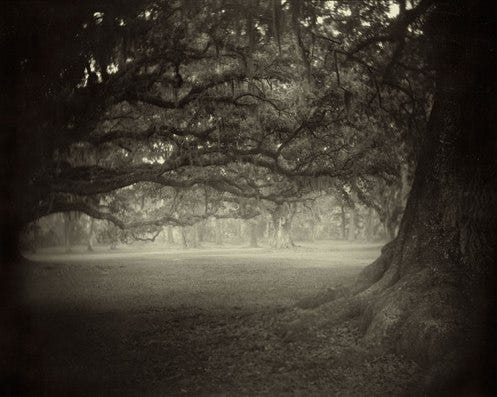
Southerners have had to look one another in the eye for a long time, and deal with a disgraceful past. Clumsily perhaps. Imperfectly. But with a sense of “the local” that Sally Mann inherently understands. Her images of Civil War battlefields depict strips of land that have absorbed blood, death and despair, but remain luxurious. Reclining sensually, and with a weary grin, they tell our story.
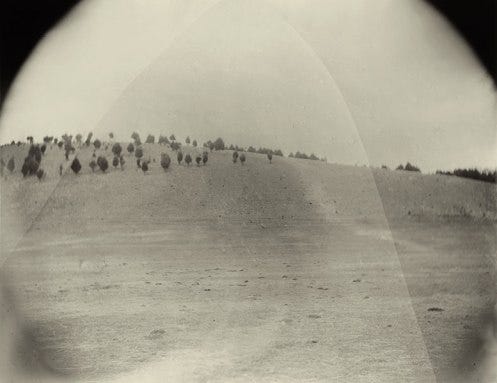
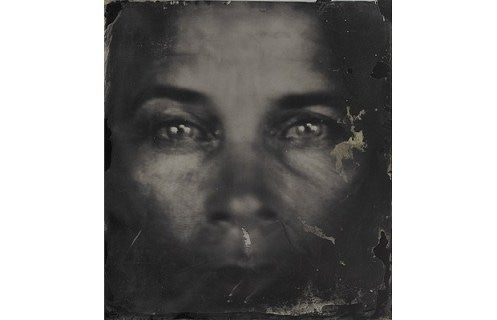
All photographs by Sally Mann.
The Appalachian Moon Witch Chronicles are set in this same corner of Virginia. If you're curious, start here.
Beautifully written, both pieces. And the current Doha story is an example of how we see, or rather are blind to, the rest of the world based on the lenses installed, which are both not our own and mostly wrong and influenced by agendas. North v South is brilliant for me personally because exploring analogies that aren't intimately linked to my own identity sometimes helps me understand my current environment (e.g. in Central Europe) without having to take sides. Love your writing, Victoria.